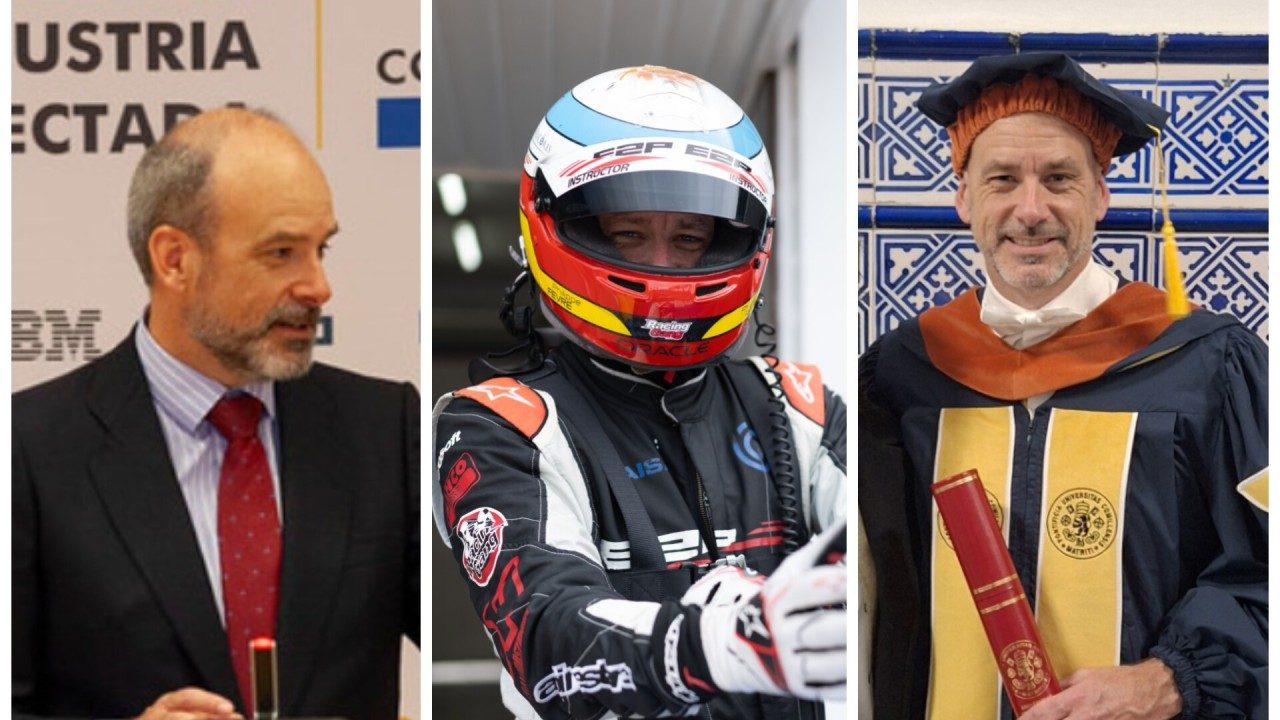
I have always lived in three “parallel universes” that, from the outside, might look totally unrelated. In one of these universes, I am an international business executive and advisor, in another universe I am a car-racing multifaceted professional, and in my third universe as an academic who culminated as a DBA. The picture you see above, heading this article, captures that reality better than any wordy description.
What I want to share in this new article is something I have always been trying to explain, but has not always been well interpreted. My three parallel universes are not separated; they are reciprocally interfaced systems, and the more openly I integrate them, the more coherent my image becomes.
In my professional business executive life, I have spent over 25 years operating across sectors and geographies, in complex environments where performance is measured by the usual indicators and outcomes, for instance, profitability growth, efficiency ratios, operating models redesign, integrating acquisitions, aligning strategy with execution, or managing teams through ambiguity. Half of that journey has been executed in finance and the other half in industrial manufacturing, but always with the same underlying obsession of creating long-term value through meticulous execution, and not just a "fast-lap".
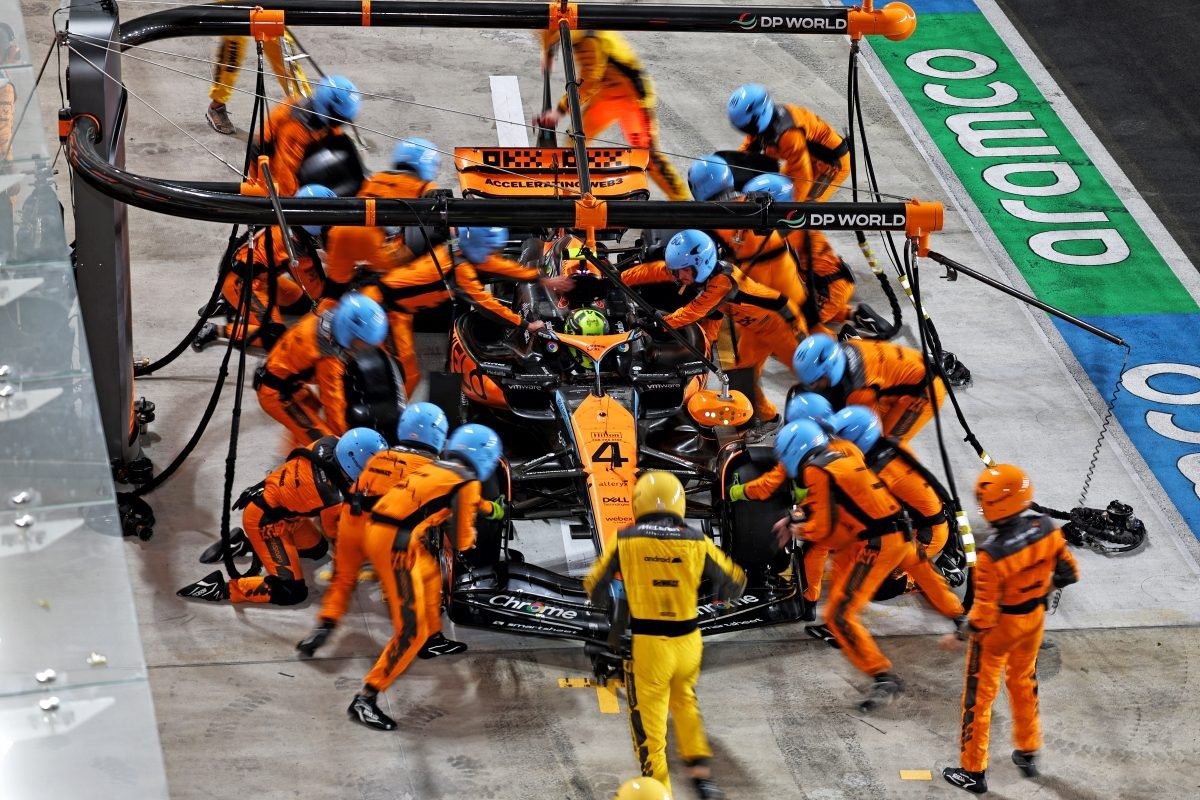
In parallel, motorsport has been an equally serious commitment. Racing is not a hobby if it is done professionally, and it requires equal obsession for top performance and a strong culture of continuous improvement, regardless of whether it is done as a racing driver, a racing engineer or as a driver coach. As you can picture from some of the most popular racing categories played on TV, this sport is a remarkable people-related environment. For instance, you may have seen an HR expert present how a business team should operate by displaying a Formula 1 pit-stop picture, which might be an iconic representation of how a bunch of professionals must work in great coordination in just a blink of an eye. Picking this analogy, to make this pit-stop possible in less than a couple of seconds, the team must be built on trust and robust training, designate very clear roles, create communication rules that can work under high pressure, and respect for everyone involved in a safe and competitive operation (driver, mechanics, engineers, organizers, stewards, marshals, and race directors).
However, for a long time I kept these two universes excessively separated, especially in corporate contexts. In certain business executive circles, a visible sports facet can be perceived (wrongly, in my view) as a distraction or as “less professional” than a typical corporate narrative. That wrong perception made me, for way too many years, talk about transformation, innovation, boards, M&A, or business operations, keeping car racing mostly out of the formal story.
Thankfully, a well-regarded talent professional made me challenge this perception, and even if it has already passed 15 years, I can still recall perfectly his words: “Stop hiding it. It is part of your identity and it signals skills that many leaders claim, but few have tested under real pressure”. I took that advice seriously because it reframed racing not as an “extra”, but as an evidence of competence in a completely different arena where the same leadership muscles are trained and verified.
Recently I made the written exercise of comparing business management and professional sports, and the overlap is quite visible. Let me share with you the main results of my analysis.
First, both are disciplines of precision under constraints. In business management you operate with limited time, limited cash, fuzzy information, and high stakeholder scrutiny. In racing you operate against the clock with extreme stress, changing conditions and challenging your physical limits, while decisions still must be made in milliseconds. In both contexts, excellence is built through attention to detail and continuous enhancement through long training sessions, creation of routines, checklists or indicators, and with your responsibilities well executed.
Second, both demand situational awareness and fast high-quality decision-making. Motorsport and execution of business strategies might be seen as different domains, but they share the same human-factors reality where errors are rarely unpredictable, as they are often expectable outcomes of poor execution or lack of training/knowledge. Effective performance in high-risk situations depends on training, effective decision-making and team coordination.
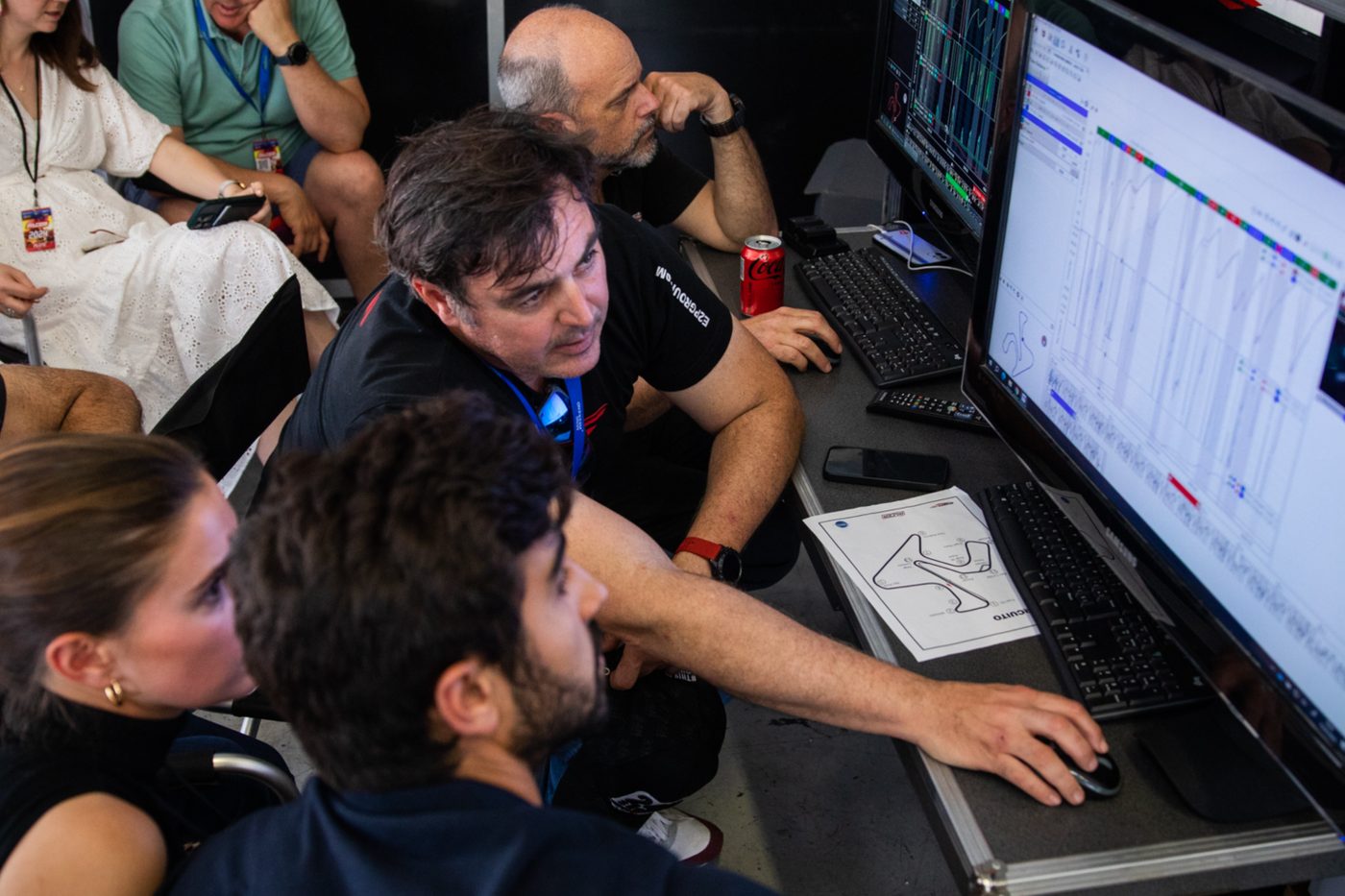
Third, both cultures reward “learning velocity” (using a common word for these universes). Racing results improve, on one hand, through coaching and telemetry data analysis (which are the equivalent of business scorecards), and on the other hand, through a very hard relationship with mistakes, requiring error root analysis and setting correction plans to prevent them from happening again, basically treating weak signals (or indicators) seriously before they become catastrophic outcomes. In business management, you should proceed likewise, spending quality time reading and understanding what KPIs are really telling you, and implementing early corrections before you run “off track”.
Fourth, these universes are intensely result-oriented. Maybe in racing this fact is more clearly appreciated, while in business management, we could say that weekly or monthly reports are the equivalent of the results of one single race in a long championship. Focusing on extremely short-term wins could sacrifice longer-term results, kind of celebrating a “fast lap” instead of focusing on winning a 12-hour endurance race.
Fifth, both environments make teamwork non-negotiable. A driver without good mechanics, engineers, a coach and a clear strategy will never win a race. A CEO is equally constrained without strong middle management and aligned stakeholders. The best teams, either on the racetrack or in boardrooms, trust expertise, distribute decision rights efficiently, and know how to work in coordination during the more stressful situations.
There is a common factor in all the above, and it is the power of training and knowledge over individual talent. In both arenas, sustainable performance comes from turning experience into a repeatable learning system with long practice sessions, disciplined training, structured debriefs, and the translation of tacit know-how into explicit routines (playbooks in business; setup sheets, telemetry reviews, and driver coaching in racing). Not everything must rely just on experience. This is why the conclusions I described are outcomes of the same underlying mechanism through a continuous improvement loop where skills are measured and refined over time. That logic naturally leads to my third universe, because "academia" is, in essence, the formalization of that learning cycle with a method and tools that make training more effective and knowledge more transferable.
Although above I have been comparing only two of my three universes, my mentioned third universe has been the way of ensuring that practice is constantly sustained by theory, sharpening my intuition with updated research and learning. After completing my engineering studies quite a long time ago, my academic path has been transformed into a lifelong learning commitment, especially for the last 10 years, completing my education with executive courses, and rounding it with my doctorate. My academic continuous learning has strengthened a structured reflection of why things happen. I did not realize the importance of keeping updating and extending my knowledge until another great piece of advice was given to me, probably the one that most changed my universes: “never stop learning”.
Basically, I am not “a business executive who also races,” nor “a racing driver who also does business,” nor “an academic who also manages”. If there is one conclusion I want to leave is that I am a person operating in three parallel realities, each one reinforcing the others. The thrill and passion of racing sharpen focus and humility. The competitiveness of business builds strategic determination. The academic path forces clarity, intellectual honesty, and lifelong improvement. Together they complete who I am, combining high standards, disciplined execution, knowledge gathering, teamwork, and respect for all stakeholders, as the best results are never produced in isolation.